Xanthine Oxidase Bovine Enzymatic LeadHunter Assay - TW
OVERVIEW
DOCUMENTS/REFERENCES
Biological Information
Background Information:
Xanthine oxidase (XOD) catalyzes the hydroxylation of many purine substrates and, in mammals, converts hypoxanthine to xanthine and then uric acid and O2-. The enzyme is widely distributed in mammals, and the abnormal product uric acid, which often causes gout, remains an issue of concern. In addition, the superoxide anion radical (O2-), generated upon the formation of uric acid, has been found to cause tissue damage. Inhibitors of this enzyme result in increased excretion of these purines and should be useful in reducing hyperurecemia which generally leads to gout.
Family:
Oxidoreductase
Sub Family:
Oxidase
Protein Name:
Xanthine Oxidase
Uniprot Number:
P47989
Gene Name:
XDH
Gene ID:
7498
Gene Aliases:
XOR|XO
Accession Number:
NM_173972
Organism:
Bovine
Construct Details:
Endogenous
Assay Information
Assay Type:
Biochemical
Assay Sub Type:
Enzymatic
Functional Mode:
Antagonist
Detection Method:
Spectrophotometry
Measured Response:
Absorbance
Testing Information
Procedure Summary:
Bovine milk xanthine oxidase is used. Test compound and/or vehicle is preincubated with 7 mU/ml enzyme‡ in phosphate buffer pH 7.5 for 15 minutes at 37⁰C. The reaction is initiated by addition of 0.165 mM xanthine for another 30 minute incubation period. Determination of the amount of uric acid formed is read spectrophotometrically. Compounds are screened at 10 μM.
Substrate:
165 µM Xanthine
Incubation:
30 min at 25°C
Control Inhibitor:
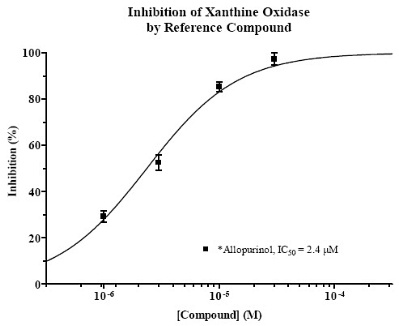
Allopurinol
Criteria For Significance:
≥ 50% of max stimulation or inhibition
Test Concentration / Dose:
Suggested concentration for initial testing is 10 uM
Test Sample Requirements:
Minimum for 1) Screen: 25 μl of 10 mM stock -OR- 1 mg (pre-weighed). 2) Dose Response: 60 μl of 10 mM stock -OR- 1 mg (pre-weighed).
Minimum Order Quantity:
2
Turnaround Time
Standard:
15 Business Days
Reference Compound Data
Clinical Relevance
Therapeutic Area:
Metabolic Diseases
Additional Information
Brand:
LeadHunter
Testing Location:
Taiwan - Taipei
Questions? Contact Us
You can easily get in touch with a Eurofins Discovery Expert or get help from our Customer Service team. Reach out with questions, or to discuss your specific discovery challenges.
